
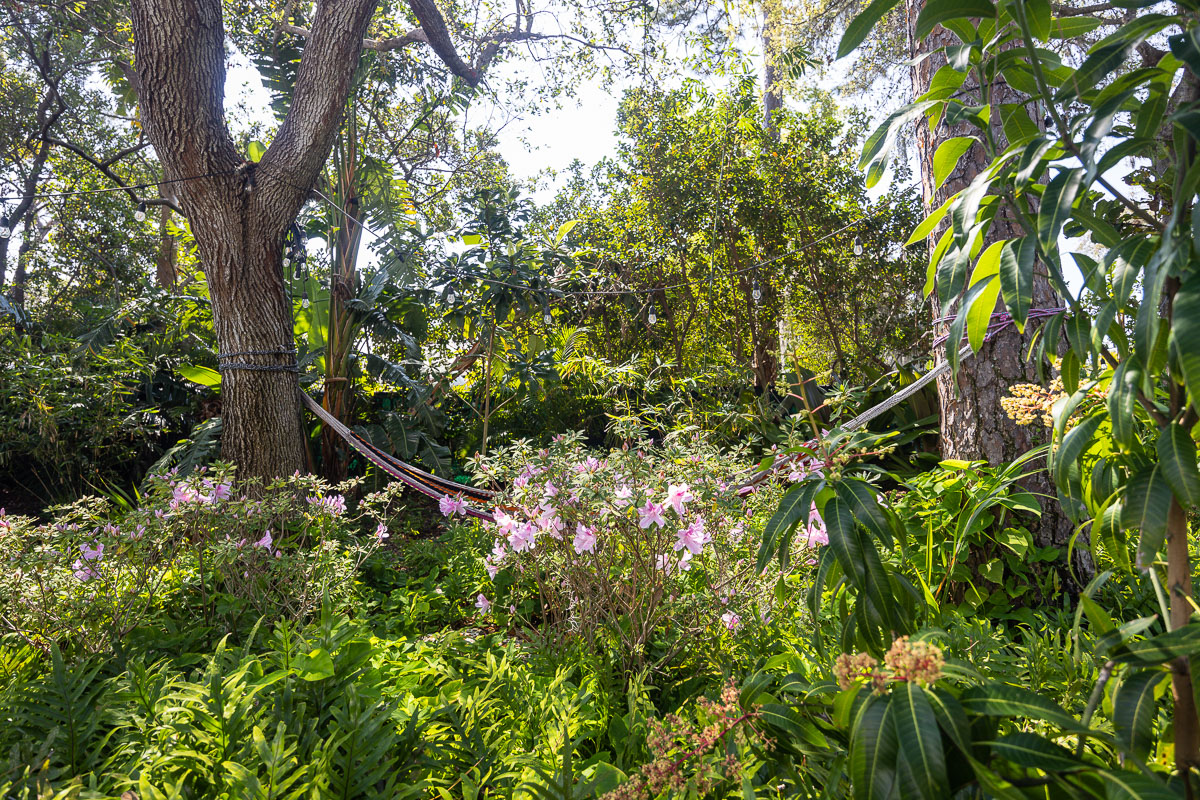
A newly installed landscape is only the beginning. Plants will widen, canopies will rise, roots will establish, and the relationship between every element will change. Good design anticipates that transformation from the start.
Mature size belongs in the first conversation.
Nursery plants are selected at one moment in their development, but they must live in the landscape for years. A small shrub can eventually cover a window. A palm placed close to a roofline may create conflict as its canopy expands. Groundcovers that appear modest can grow together quickly and overwhelm a narrow bed.
Designing with mature dimensions protects the architecture and gives each plant enough room to express its natural form. It also reduces the need for constant corrective pruning, which can weaken plants and erase the qualities that made them desirable in the first place.
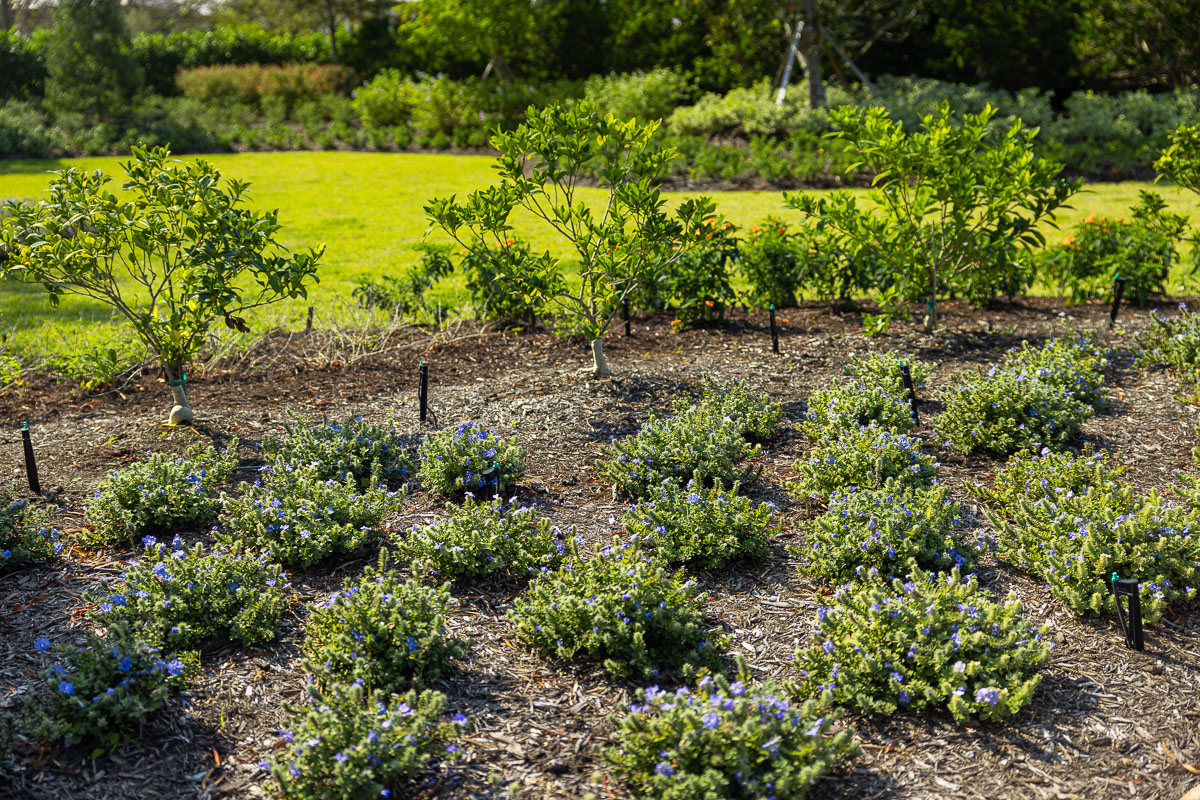
Placement considers mature width, circulation, architecture, and nearby plants.
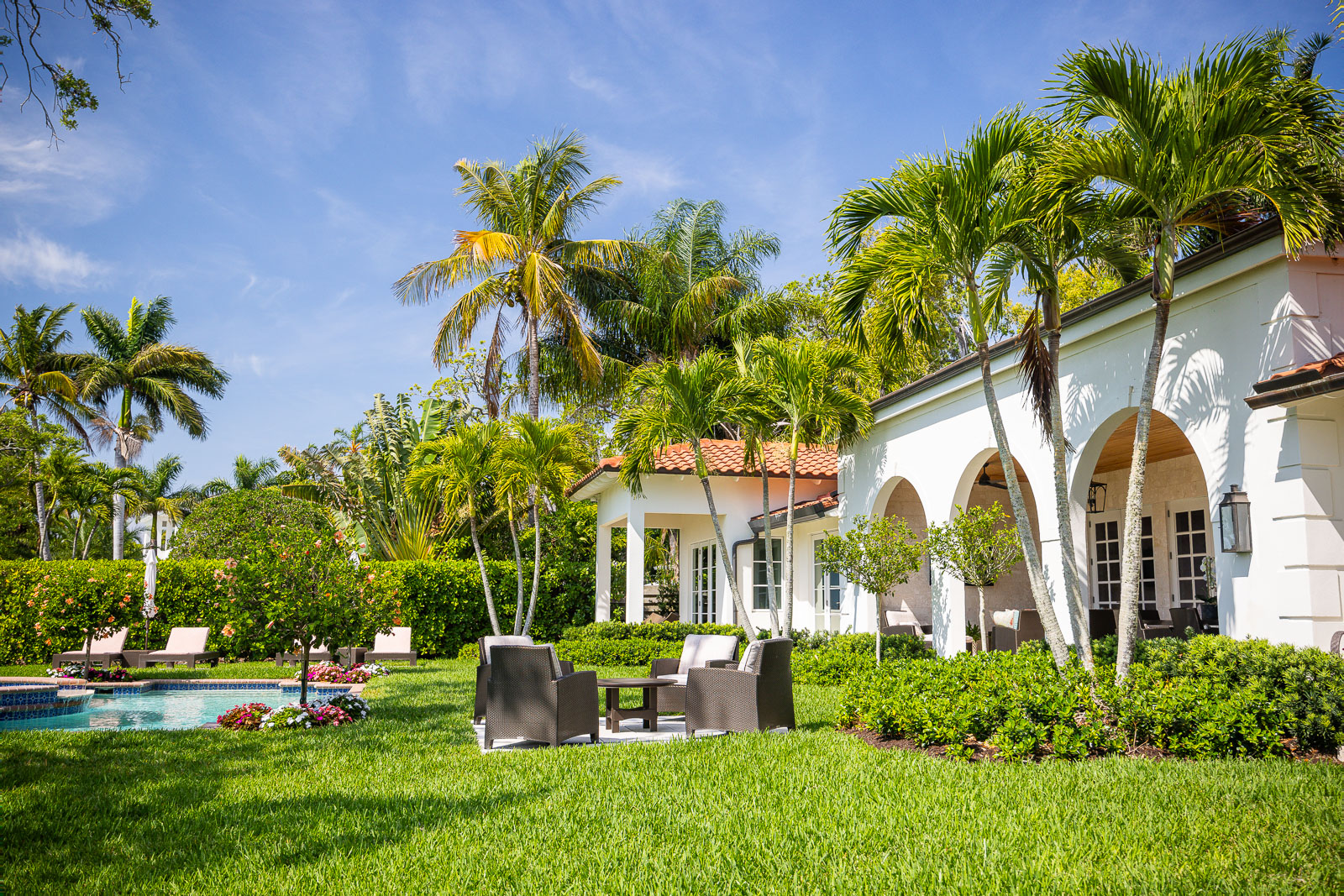
Balanced layers become fuller while the original composition remains clear.
Patience creates better proportion.
There is a natural temptation to make a new landscape feel completely full on the first day. Filling every opening may create immediate impact, but it often produces crowding within a short time. Plants compete for light and air, distinct forms disappear, and maintenance becomes more aggressive.
Thoughtful spacing can look quiet at installation. That restraint is intentional. It allows the composition to settle into its intended proportions as plants develop. Temporary open space is not evidence that something is missing. It is room reserved for the future landscape.
Impact can still be created through strategic specimen sizes, stronger focal points, and repeated masses. The key is to invest in the moments that establish the design without forcing every area to appear mature immediately.
“A landscape designed for tomorrow becomes more convincing with time instead of requiring constant correction.
Structure carries the landscape forward.
Long-term beauty depends on more than growth. A successful design needs an underlying structure that remains visible through seasonal changes. Evergreen masses, clear bed lines, repeated forms, and appropriately placed palms can provide that framework.
Flowering accents and colorful foliage can then change within the structure without making the landscape feel disorganized. This balance allows homeowners to refresh selected areas over time while preserving the character of the overall composition.
Will each plant have enough room to mature while preserving the views, pathways, and architecture around it?
Establishment care protects the plan.
Even a carefully designed landscape needs attentive care during establishment. Consistent watering, appropriate nutrition, observation, and timely adjustments help roots develop and allow the intended structure to take hold.
Maintenance should support the design rather than repeatedly reshape it. Pruning with mature form in mind, preserving clear edges, and monitoring plant health help the landscape progress naturally instead of becoming dependent on correction.
The reward is a property that grows into itself. Plants become fuller, shade becomes richer, and the relationship between the home and landscape gains depth. A mature landscape is beautiful because time was considered as part of the design.